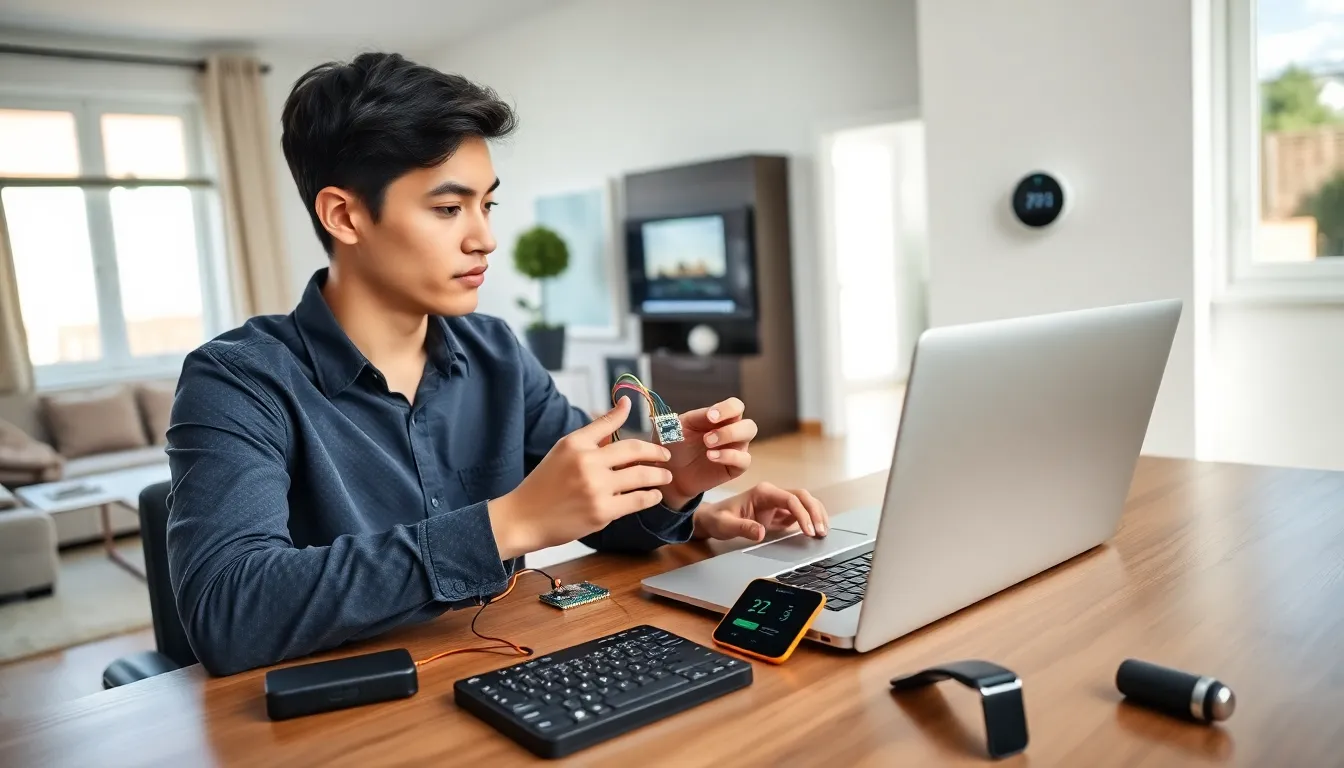
The Internet of Things connects everyday devices to the internet. Smart thermostats, wearable fitness trackers, and voice assistants already live in millions of homes. Learning how to Internet of Things works opens doors to automation, efficiency, and creative projects.
This guide covers the basics of IoT technology. Readers will learn what IoT means, discover common applications, and find step-by-step instructions for setting up their first connected device. Whether someone wants to build a smart home or explore hobby electronics, this article provides a clear starting point.
Table of Contents
ToggleKey Takeaways
- The Internet of Things connects everyday devices to the internet, enabling automation and data sharing without direct human input.
- Start learning how to Internet of Things works with beginner-friendly smart home devices like smart speakers, thermostats, or fitness trackers.
- Building your first IoT project requires a microcontroller (like ESP32), sensors, and free software such as Arduino IDE.
- A basic temperature-monitoring IoT project takes about two hours and teaches core skills for more advanced builds.
- Protect your IoT network by changing default passwords, creating a separate guest network, and updating firmware regularly.
- Over 18 billion IoT devices existed worldwide in 2024, with projections exceeding 32 billion by 2030.
What Is the Internet of Things
The Internet of Things refers to physical objects that connect to the internet and share data. These objects include sensors, appliances, vehicles, and industrial equipment. Each device collects information and sends it to other devices or cloud platforms.
IoT differs from traditional computing in one key way. Computers require direct human input. IoT devices operate independently. A smart thermostat reads room temperature and adjusts heating without someone pressing buttons. A fitness tracker monitors heart rate and syncs data to a phone app automatically.
Three elements define every IoT system:
- Sensors or actuators: These gather data or perform actions
- Connectivity: Wi-Fi, Bluetooth, Zigbee, or cellular networks transmit information
- Processing: Cloud servers or local hubs analyze data and trigger responses
The Internet of Things has grown rapidly. Research firm Statista estimates over 18 billion IoT devices existed worldwide in 2024. Experts predict this number will exceed 32 billion by 2030. This growth reflects how useful connected devices have become for consumers and businesses alike.
Common IoT Applications for Beginners
New users often start with smart home devices. These products offer immediate benefits and require minimal technical knowledge.
Smart Home Automation
Smart speakers like Amazon Echo and Google Nest Hub serve as entry points. They control lights, play music, and answer questions. Users can add smart bulbs, plugs, and switches to expand their setup. A simple voice command turns off all lights at bedtime.
Smart thermostats like the Nest Learning Thermostat save energy. They learn household schedules and adjust temperatures accordingly. Many users report 10-15% reductions in heating and cooling costs.
Health and Fitness Tracking
Wearable devices track steps, sleep patterns, and heart rate. Popular options include Apple Watch, Fitbit, and Garmin watches. These devices sync data to smartphone apps. Users can monitor trends, set goals, and share progress with healthcare providers.
Security and Monitoring
Video doorbells and smart cameras protect homes. Ring, Arlo, and Wyze offer affordable options. Motion alerts notify homeowners about visitors or unusual activity. Some systems integrate with smart locks for keyless entry.
Garden and Pet Care
Smart irrigation controllers water lawns based on weather forecasts. Automatic pet feeders dispense food on schedules. These IoT devices handle routine tasks while owners travel or work.
Essential Components for Your First IoT Project
Building an Internet of Things project requires specific hardware and software. Beginners should gather these components before starting.
Microcontrollers and Development Boards
A microcontroller acts as the brain of an IoT device. Popular choices include:
- Arduino Uno: Great for learning basic electronics and programming
- Raspberry Pi: A full computer that runs Linux and handles complex tasks
- ESP32 or ESP8266: Affordable boards with built-in Wi-Fi for IoT projects
The ESP32 costs around $5-10 and connects directly to Wi-Fi networks. This makes it ideal for first-time IoT builders.
Sensors and Modules
Sensors detect environmental conditions. Common options include:
- Temperature and humidity sensors (DHT11, DHT22)
- Motion detectors (PIR sensors)
- Light sensors (photoresistors)
- Distance sensors (ultrasonic modules)
Most sensors cost under $5 each. Starter kits bundle multiple sensors with cables and breadboards.
Connectivity Options
Most home IoT projects use Wi-Fi. The ESP32 handles this natively. For battery-powered devices, Bluetooth Low Energy (BLE) consumes less power. Long-range outdoor projects might use LoRa modules.
Software and Platforms
The Arduino IDE provides free software for programming microcontrollers. Cloud platforms like Blynk, ThingSpeak, and Home Assistant help users build dashboards and automate actions. These tools require no monthly fees for basic use.
Step-by-Step Guide to Setting Up IoT Devices
This section walks through setting up a basic IoT sensor. The example uses an ESP32 board with a temperature sensor.
Step 1: Gather Materials
Collect these items:
- ESP32 development board
- DHT22 temperature/humidity sensor
- Jumper wires (3 pieces)
- Micro USB cable
- Computer with Arduino IDE installed
Step 2: Wire the Components
Connect the sensor to the ESP32:
- Connect the sensor’s VCC pin to the ESP32’s 3.3V pin
- Connect the sensor’s GND pin to a ground pin
- Connect the sensor’s data pin to GPIO 4
Step 3: Install Required Libraries
Open Arduino IDE. Go to Tools > Manage Libraries. Search for and install:
- “DHT sensor library” by Adafruit
- “Adafruit Unified Sensor”
Step 4: Upload the Code
Create a new sketch. Add code that reads temperature data and prints it to the serial monitor. Many tutorials provide ready-to-use examples. Upload the code to the ESP32 using the USB cable.
Step 5: Connect to Wi-Fi
Modify the code to include Wi-Fi credentials. The ESP32 will connect to the home network. Add functions that send data to a cloud platform like ThingSpeak.
Step 6: Build a Dashboard
Create a free ThingSpeak account. Configure a channel to receive temperature data. The platform generates graphs automatically. Users can view readings from any web browser.
This basic Internet of Things project takes about two hours to complete. It teaches core skills that apply to more advanced builds.
Security Best Practices for IoT Networks
IoT devices introduce security risks. Hackers target poorly protected gadgets to access home networks. Follow these practices to stay safe.
Change Default Passwords
Many IoT devices ship with default usernames and passwords. Hackers know these credentials. Change them immediately after setup. Use strong passwords with 12+ characters, numbers, and symbols.
Create a Separate Network
Most routers support guest networks. Put IoT devices on a separate network from computers and phones. If a smart bulb gets compromised, attackers cannot reach sensitive data on personal devices.
Update Firmware Regularly
Manufacturers release security patches through firmware updates. Enable automatic updates when possible. Check device apps monthly for available updates.
Disable Unused Features
Turn off features that aren’t needed. If a smart speaker doesn’t use Bluetooth, disable it. Fewer open connections mean fewer attack opportunities.
Research Before Buying
Some IoT brands prioritize security more than others. Read reviews and check if the manufacturer provides ongoing support. Avoid cheap devices from unknown companies, they often lack security updates.
Monitor Network Traffic
Router apps and network monitoring tools can detect unusual activity. If an IoT device sends data to unknown servers, investigate immediately.